Saddle Pad or Blanket? Understanding What Each Layer Does
Saddle pad or blanket? Learn how each layer works with a Western saddle, what to check for fit, and how to assess the setup over a riding week.
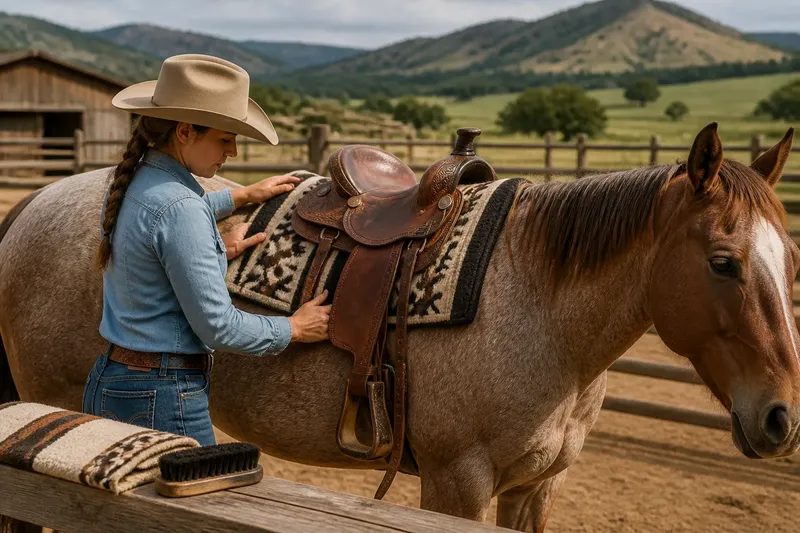
A saddle pad or blanket changes how a Western saddle contacts a horse, but neither can correct a saddle that does not fit. A pad is usually the functional layer; a blanket may sit beneath it for tradition, appearance, or a particular layering arrangement. The useful question is how the full stack behaves on your horse, not which item is universally better.
Separate the layer’s job from its appearance
A Western saddle has a broad underside, often with fleece or another lining. A saddle pad adds material between that underside and the horse’s back. Depending on its construction, it can provide cushioning, help manage sweat, and create a clean, replaceable surface under the saddle. Pads vary in material, thickness, shape, and firmness.
A traditional saddle blanket is typically woven and may be used as the visible layer, a working layer, or part of a layered setup. The word “blanket” does not identify one consistent thickness or performance. Some are comparatively thin; others are substantial. Check the actual fabric and construction rather than assuming the name tells you how it will behave under load.
In Western tack, people may use “pad” and “blanket” loosely, and local barn habits differ. Ask what a particular rider means, then look at the item itself. A decorative blanket and a purpose-built pad do not necessarily serve the same role just because both lie beneath a saddle.
Let the saddle and horse set the fit question
Fit concerns the whole arrangement: the horse’s back, the saddle’s shape, any lining, and every layer beneath it. A thick layer can take up space and alter how the saddle sits. A folded edge, uneven surface, or shifting material can create pressure points or interfere with a stable position. Adding more padding is not a reliable way to solve a saddle-fit problem.
Before riding, place the saddle and intended layers on a clean, dry back. Center the material, smooth wrinkles, and check that it does not bunch beneath the bars or extend in a way that rubs. Settle the saddle gently and look from both sides and behind. The rigging and saddle should sit as they normally do; if the saddle seems perched, tilted, or newly tight, stop and reassess instead of tightening the cinch to force the arrangement into place.
Follow the saddle and pad maker’s instructions for intended use and placement. If the saddle’s fit or the horse’s comfort remains uncertain, ask a qualified saddle fitter or experienced equine professional to assess the combination.
Use a riding week to notice patterns
A short routine can reveal whether a layer stays in place and how the horse’s back looks afterward. Keep the saddle and layering arrangement consistent while you observe; changing several pieces at once makes it harder to identify what changed.
- Before the first ride: Check the pad or blanket for dirt, dampness, hard debris, worn seams, and stiff or damaged areas. Brush away loose material and replace anything that cannot lie smooth.
- At the first saddling: Note where the pad sits in relation to the saddle and whether its edges are even. Check for folds, trapped hair, or a section that is thicker on one side.
- After the ride: Lift the saddle and look at the pad, the horse’s coat, and the back for damp patches, displaced material, unusual rubs, or signs of tenderness. A sweat pattern alone does not diagnose fit, but a repeated change deserves attention.
- Between rides: Let the material dry fully before storing it. Remove hair and grit, and inspect the underside and seams so a small defect does not become a rough contact point.
- At the end of the week: Review what stayed stable and what did not. If the saddle shifts, the pad bunches, or the horse shows discomfort, pause the current setup and seek knowledgeable help rather than adding another layer.
Say you ride the same horse in the same saddle across several outings, but the blanket creeps backward each time. You could check that it is centered and smooth before mounting, then observe whether the movement recurs without changing other tack. If it does, the saddle-and-layer combination needs assessment; the expected observable result of that check is a clearer account of when and where the material moves, not a diagnosis by itself.
Choose a layer arrangement for the saddle you have
A purpose-built pad used alone may make sense when its shape and construction suit the saddle and horse. A blanket alone may be appropriate if it is designed for that role and the resulting fit is sound. Some riders place a blanket over a pad for a traditional look or to protect the pad, but the extra fabric can change bulk and stability. There is no automatic advantage to stacking both.
Consider these practical questions before changing the arrangement:
- Does the saddle sit evenly with this exact layer or stack?
- Can the material lie flat without folds under the saddle?
- Does its shape leave appropriate clearance around the saddle’s contact area?
- Does the fabric stay in place during the horse’s ordinary movement?
- Can you clean and dry it between rides without leaving grit or dampness?
- Does the horse remain comfortable, with no recurring rubs or sensitivity?
Do not select a layer by thickness alone. A very soft or thick pad can feel protective in your hands yet alter saddle position. A thin woven blanket may suit one setup and be inadequate for another. Material, shape, compression, and the saddle’s own underside all matter together.
What should you check before and after riding?
How do I tell whether the saddle pad is centered?
Look from both sides and behind after placing the saddle, and check that the material has not folded or pulled unevenly. Recheck after the horse moves, since a neat position at the start can change under motion.
Can I ride with a blanket alone?
That depends on the blanket’s construction and how the saddle fits with it. Judge the complete setup, and do not assume a decorative blanket provides the same function as a purpose-built pad.
Should I put a blanket over a saddle pad?
Only if the combined layers remain flat, stable, and compatible with the saddle’s fit. The added thickness may change how the saddle sits, so assess the full arrangement rather than treating the blanket as a harmless cover.
What does a damp or uneven sweat pattern mean?
It is an observation, not a standalone fit test. Compare it with saddle movement, pad condition, and the horse’s response, and seek a qualified assessment if a concerning pattern persists.
Keep the setup useful, not complicated
When deciding between a saddle pad or blanket, start with the saddle’s fit and the horse’s response. Choose the simplest sound arrangement, keep it clean and smooth, and observe it over ordinary rides. A familiar, stable setup is more useful than extra layers that add bulk without addressing a clear need.
Write down the saddle, layer arrangement, and any recurring movement or rub you notice. That brief record gives a saddle fitter or equine professional concrete details to work from, while helping you avoid changing tack based on a single ambiguous mark.