From Ranch Work to the Arena: Where Western Riding Patterns Came From
Western riding patterns carry traces of ranch work: learn how practical tasks shaped arena routines, what each movement communicates, and how to watch with context.
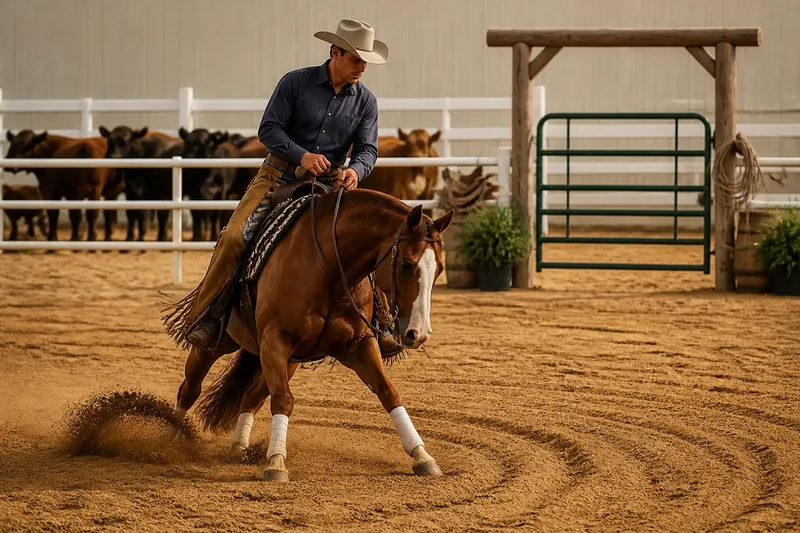
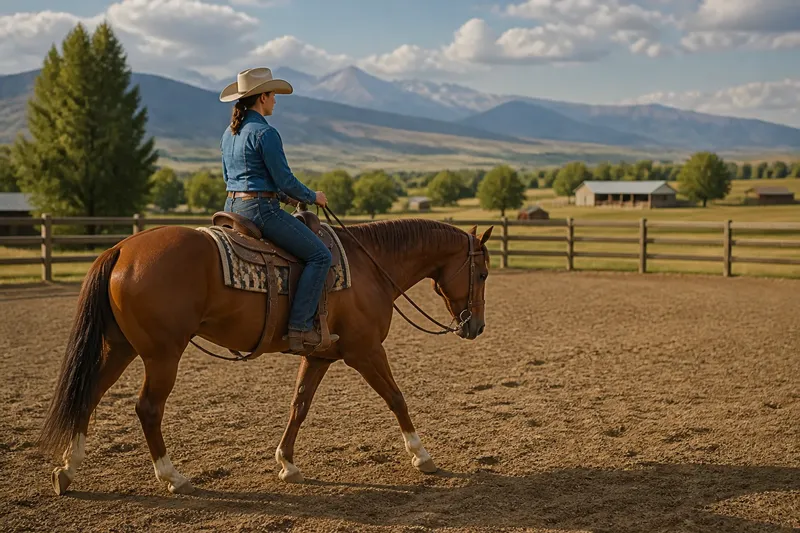
Western riding patterns carry traces of ranch work, even when a horse now performs them inside a marked arena. A rollback, a lead change, or a careful approach to a gate makes more sense when you notice the practical problems these movements once helped riders manage. The pattern is not a reenactment of ranch labor; it is a structured way to display qualities that work demanded.
Arena patterns preserve useful habits, not a ranch job
Ranch work rarely followed a neat script. A rider might need to leave a group, turn a cow, cross rough ground, or pause while a gate was handled. Those tasks rewarded a horse that could stay attentive, adjust direction, and respond without a prolonged argument. Arena patterns take selected abilities from that broader working context and arrange them so an observer can assess them.
That distinction matters. A horse completing a pattern is not necessarily doing the original task, and a pattern cannot reproduce every pressure or uncertainty of working outside an arena. Instead, it offers a controlled setting in which traits associated with useful work become visible: balance in a turn, willingness to move forward, steadiness during a pause, or responsiveness to a change in direction.
The exact history varies across ranches, regions, and competition traditions. It is more accurate to think of arena patterns as shaped by a family of practical needs than to assign every movement to one single origin story.
Turns and transitions reflect changing demands
On a ranch, a horse might need to move from a steady travel gait to a quicker response, then settle again when the immediate task was over. In an arena, changes of gait and pace make that adjustability legible. The judge or spectator can see whether the horse stays organized through the transition rather than simply moving fast or slow.
Tight turns also have a practical logic. When space is limited, a horse that can redirect its body without losing balance is useful. In a pattern, the turn is placed where its shape can be observed. The rider is not navigating a real herd or obstacle, but the movement still asks for coordinated control rather than a broad, drifting change of direction.
Pay attention to what happens immediately before and after a turn. Does the horse arrive at it in a controlled rhythm? Does it leave without rushing? Those details tell more than the turn’s appearance alone. A sharp-looking pivot may be less meaningful if the horse loses its composure or needs repeated correction afterward.
Stops and pauses make composure visible
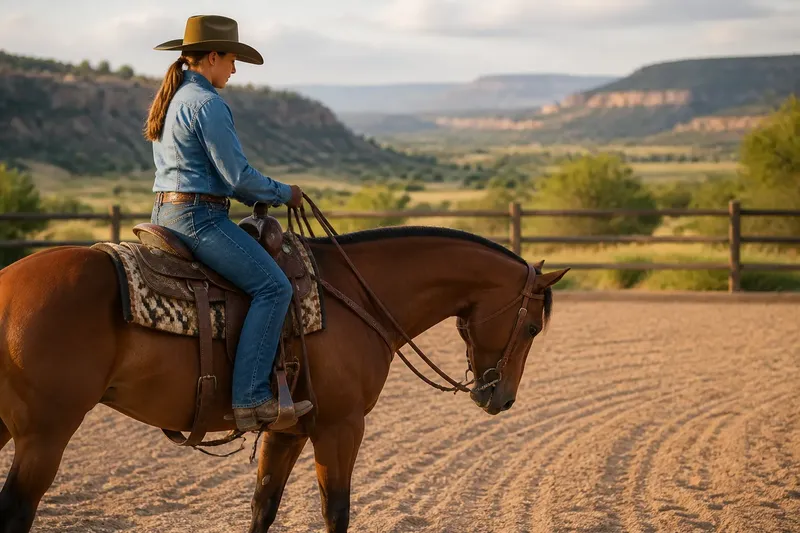
A stop can suggest the value of a horse that is able to come back from forward motion and remain attentive. Ranch tasks included moments when a rider needed the horse to wait, stand, or hold position while attention shifted elsewhere. In arena competition, a stop creates a clear, observable pause, but its significance lies in the transition into stillness as much as the stillness itself.
Look for a horse that appears settled rather than braced. A pause can show whether the animal remains mentally available to the rider, or whether stopping has become a contest of tension. This is not a complete measure of temperament or working ability; it is one brief view of how horse and rider handle a change in demand.
The setting also changes what the pause means. An arena offers familiar boundaries and a prepared surface. On a ranch, footing, nearby animals, and the task at hand can vary. The movement may share a practical ancestry while carrying different pressures in each place.
What do common arena movements suggest?
Why do patterns include circles?
A circle lets an observer see whether the horse can maintain a chosen path and pace while bending through a curve. In practical riding, traveling around an animal or changing position may call for a controlled arc, though an arena circle is a simplified display rather than a direct copy of ranch work.
What does a lead change show?
A lead change is a change in which foreleg leads during a canter. In a pattern, it makes coordination and responsiveness visible as the horse changes direction or reorganizes its stride; its presence should not be treated as proof that the horse has performed a particular ranch task.
Why might a pattern include a gate?
A gate offers a recognizable reminder that a working horse may need to remain attentive near a boundary while a rider manages an opening. Arena gate work is still a prepared exercise, so watch for control and steadiness rather than assuming it reproduces every challenge of handling a gate outdoors.
Do arena patterns recreate ranch work?
No. They select movements and responses associated with useful riding, then present them under controlled conditions. A pattern can help viewers recognize certain qualities, but it cannot capture the full range of decisions, terrain, and changing circumstances found in ranch work.
Rules turn practical qualities into observable criteria
Competition rules give a pattern a shared structure. They identify the required movements and provide a basis for judging execution. That structure can make a class easier to follow, but it also means a judge evaluates the performance against the discipline’s stated expectations, not against an imagined universal version of ranch work.
Different classes may emphasize different qualities. Some patterns put more attention on transitions and control; others may include movement around a gate or a change in direction. Read the class description and posted pattern before drawing conclusions about what a movement is meant to demonstrate. The same maneuver can serve different purposes in different events.
For spectators, a useful habit is to separate three questions: What did the pattern ask for? How clearly did the horse and rider perform it? What working quality might that movement suggest? Keeping those questions distinct prevents a polished arena performance from being mistaken for a full account of a horse’s abilities away from the arena.
Watch for purpose instead of collecting movement names
A list of maneuvers can make a pattern feel like a vocabulary quiz. A better approach is to watch how each movement changes the horse’s job. A transition asks for a different pace. A turn asks for redirection. A pause asks the horse to settle without disengaging. The sequence links those demands and shows whether the pair can move among them smoothly.
Notice the path as well as the maneuver. A horse that follows a clean line into a turn may be showing organization; a horse that wanders toward it may be struggling to maintain the intended route. The difference is visible without knowing every specialized term. It also helps explain why patterns value accuracy alongside speed or spectacle.
Imagine a novice spectator watching a ranch riding class and seeing a horse approach a gate, pause, then turn away. If the spectator first asks what practical qualities the sequence could call for—attention, steadiness, and a controlled change of direction—the movements become easier to interpret. The expected observable result is a more informed reading of the performance, without assuming the arena scene is an actual ranch task.
Patterns carry tradition while changing with the setting
Western riding is not a single, frozen tradition. Ranch routines differ, competition formats develop their own conventions, and riders may encounter the same movement in distinct contexts. Arena patterns retain a connection to practical riding while also serving the needs of sport: clear boundaries, repeatable tasks, and a performance that can be judged.
That blend explains why some movements feel familiar across different western classes, yet their meaning is not always identical. A maneuver may preserve an old practical purpose, signal a quality valued by a modern class, or do both at once. The context—class rules, pattern design, and how the horse is asked to perform—helps determine which interpretation fits.
When you watch, treat the pattern as a window rather than a complete portrait. Notice the practical quality each movement seems to call for, then keep the limits of the arena in view. That approach makes Western riding patterns easier to understand without confusing a carefully designed demonstration with the unpredictable work that helped shape it.